Tile Wastage: How much extra tile should you buy?
Buying the correct amount of tile is an important consideration for any tiling project. Buying too little of a tile can delay the project and buying too much can be costly.
Tile wastage definition comprises the additional quantity of tiles that will be required for cutting, trimming, breakage, pattern matching, and the like activities, including any losses associated with them. Understanding how much extra tile you should buy in advance is essential to make sure that you have enough and can install it efficiently.
How much extra tile should you buy?
As a general plan for tiling projects:
Straight or simple layouts: Additional 5%
Rooms with more corners and cuts: Additional 10%
Diagonal, complex or patterned layouts: Additional 10-15%
Projects which require significant pattern or vein matching: Depends on the design.
The exact amount of extra tile needed can vary according to the room, tile size, installation pattern and skill of the person installed.
How do you calculate how much tile you need?
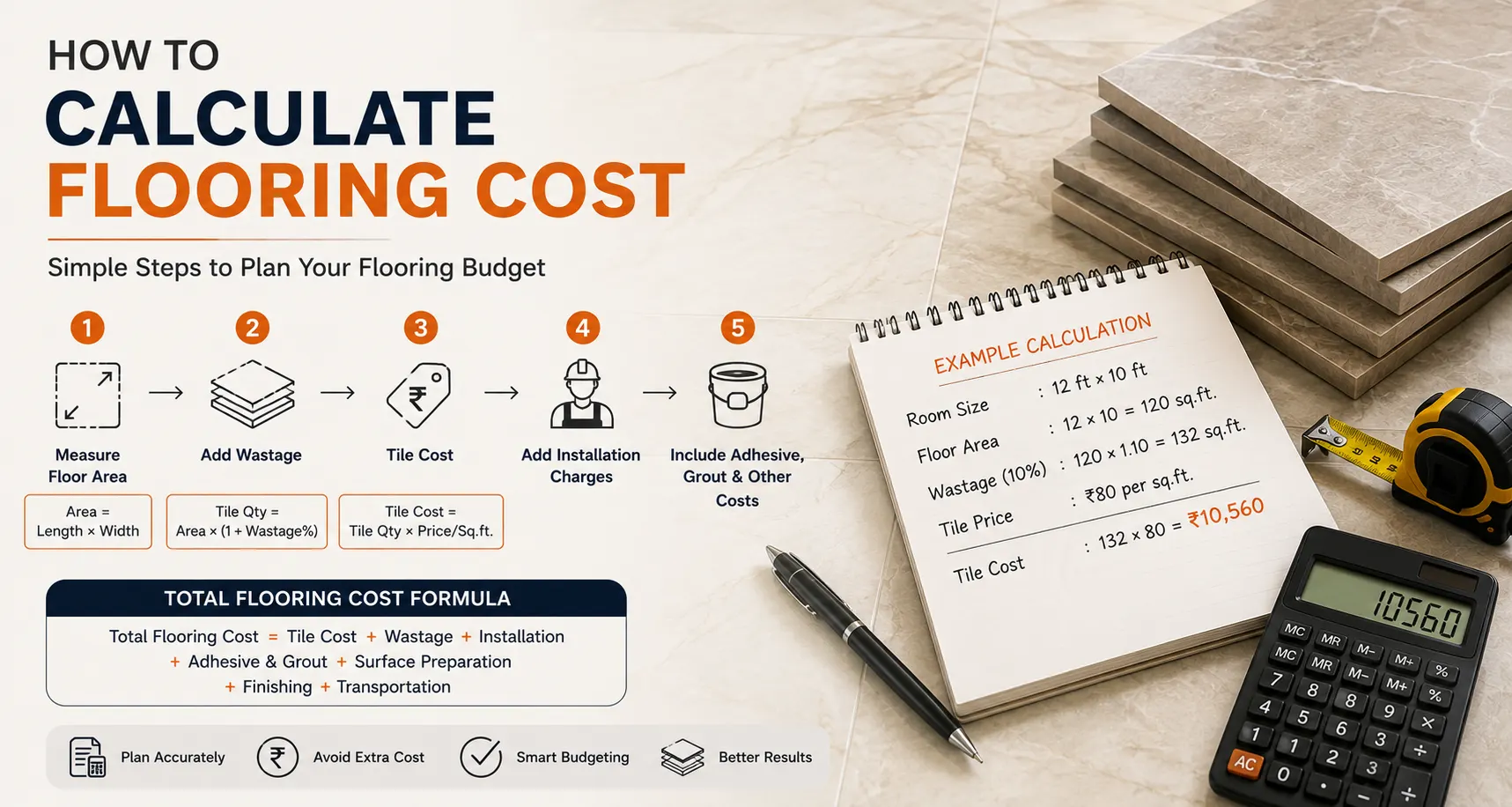
Calculate the total area to be tiled using the following formula:
Floor Area = Length × Width
For example, if the room is to be tiled is 12 feet length and 10 feet with:
12 × 10 = 120 sq. ft.
If we consider 10% wastage:
120 × 1.10 = 132 sq. ft.
It means that we need to purchase 132 sq. ft. of tile.
You must always calculate the amount of tile needed considering its exact size and the coverage mentioned on the tile packaging. For additional help with tile quantity calculations, use the tile calculator.
Why is tile wasted?
Tile wastage does not always refer to broken or damaged tiles. Some wastage is normal and may occur due to the following reasons:
Cutting and trimming: Tiles have to be cut and trimmed around several objects in the room such as walls, doors, columns, etc.
Corners and irregular areas: Extra cuts are frequently required in irregularly shaped rooms.
Breakage: Tiles may get broke during transit, handling and the installation itself.
Pattern matching: Patterned or decorative tiles, designs with a specific direction and realistic tiles with natural markings may require more tiles to match the design.
Future repairs: It is a good idea to have spare tiles in case a tile breaks after the installation is complete.
Doesn't the thickness of a tile influence wastage?
The size of a tile can play a role in determining the amount of wastage. The size of the tile and the total area of the room can affect how much cutting is needed for installing the tile.
Tiles of larger formats allow for a modern look with fewer joints. They can be more challenging to cut and can require more effort to fit around columns, corners and other objects in the room. However, small tiles allow for fitting in more intricate detail around these objects, albeit with more joints.
The size of the right tile depends on a variety of factors and is not restricted to the size of the room.
How can you reduce tile wastage?
Proper planning can help to reduce the wastage of tiles to a large extent. Some recommendations that can help in reducing the wastage of tiles include:
Measuring the area: Always measure the area of the rooms that need to be tiled and also consider the odd shaped areas
Laying out a plan: Always make a plan for laying tile.
Buy the correct size of tiles: Buy larger sized tiles when installing in larger areas.
Hire an experienced installer: A professional installer will know how to cut the tiles in the most optimal way and reduce wastage because of unnecessary breakage.
Buy from the same batch: It is a good idea to buy the same batch of tiles whenever possible to avoid inconsistencies.
Do I need to reserve spare tiles after installation?
Yes. It is a good idea to keep spare tiles even after the installation process. This is because it can be difficult to find a matching design at a later date if one of the tiles breaks and needs to be replaced. Spare tiles also come in handy for repairs if the problem occurs after the warranty period has expired. Spare tiles should be kept in a cool and dry place and all the relevant product literature should be kept for reference in the future.
Final thoughts
There is no one figure for tile wastage that applies to all tiling projects. Some simple installations may only require an additional 5% of tile whereas intricate patterns, diagonals, patterns and designs may require an additional 10-15% or more. The area of the room should be calculated accurately and extra tiles should be bought for cutting and breakage. Always measure the area and create a plan for the layout of the tile. These few steps can help to avoid delays to the installation due to a lack of tile and can also help to avoid buying too much tile and spending more than intended. In addition, you'll have spare tiles if any of the installed tiles break in the future.