The Evolution of Flooring in India: From Kota Stone to Full Body Vitified
Primary keyword: evolution of flooring in India
Introduction of evolutionary aspects of flooring in India
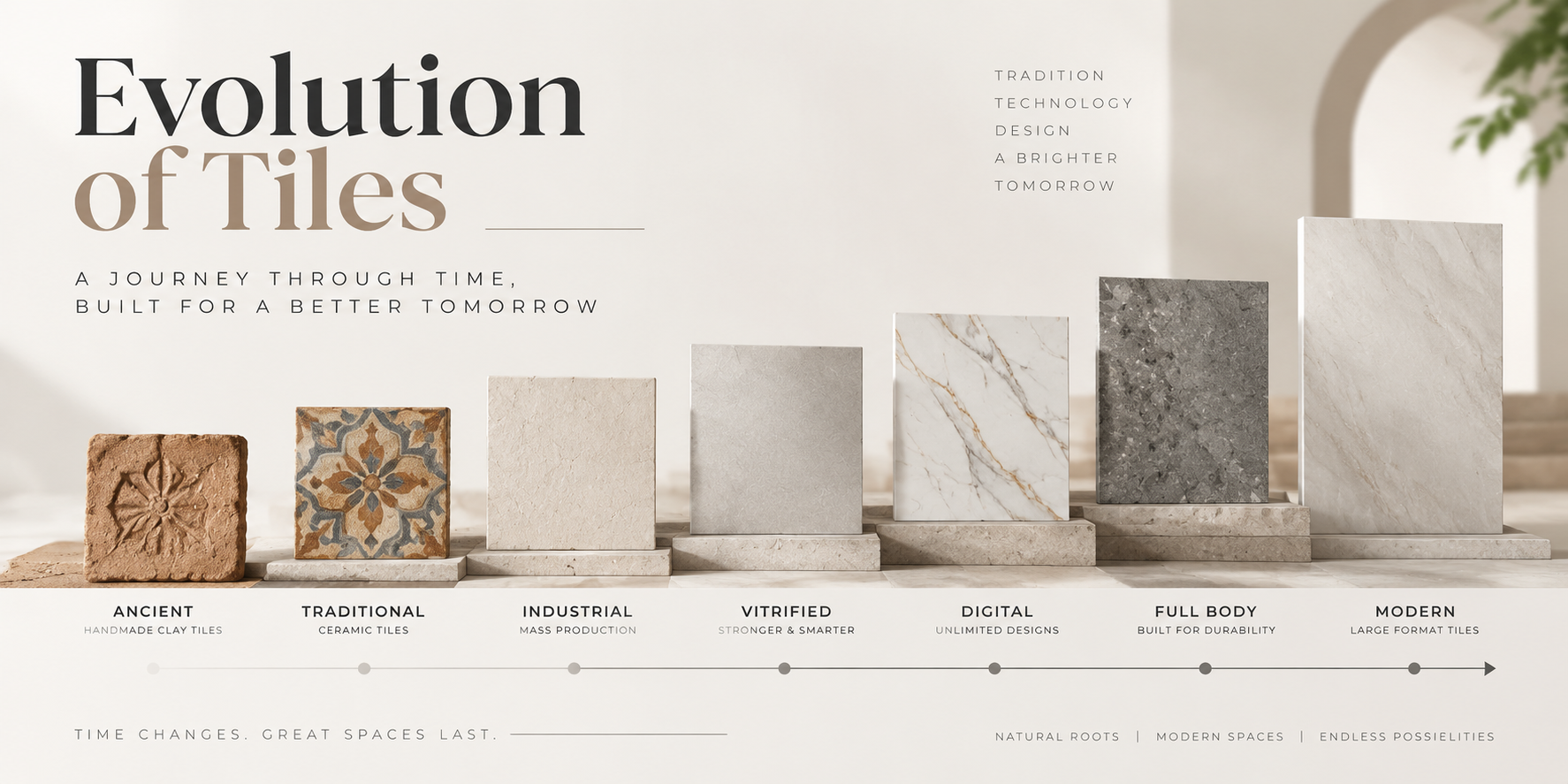
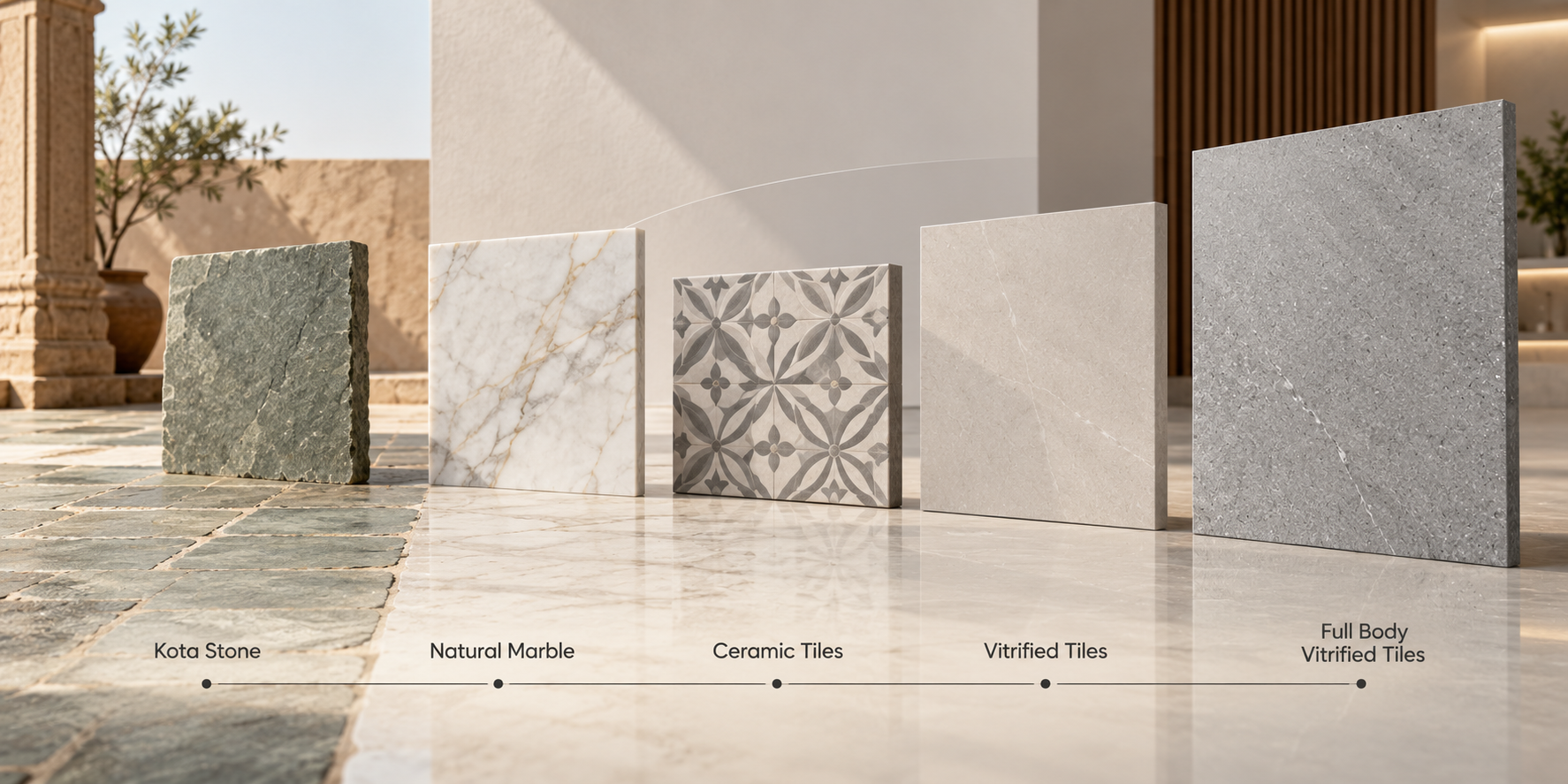
Evolution of flooring in India includes the transformation from Kota stone and natural marble to the modern-day full-body vitrified tiles. In today’s world, buyers consider various aspects of flooring, including installation needs, maintenance, and availability in the local market.
Evolution of flooring in India
1. From Kota stone to natural materials
Image alt text: Traditional Indian building with green Kota stone flooring and natural stone texture
Indian residential and commercial buildings have seen notable use of Kota stone, marble, granite, and natural wood for many years. The popularity of products made of natural materials is due to their natural appearance and useful features.
Kota stone is a type of limestone, which has been used for residential and commercial construction for several decades. This material has subtle patterns, making it perfect for bathrooms and other humid rooms. It is also suitable for use in places with a moderate level of traffic, for example, for laying tiles on the floor of a hallway or stairs. However, working with this type of stone requires special skills. This material is processed using specialized tools. For the proper laying of floor tiles, the intervention of professional masters is necessary. In addition, each type of stone requires specific methods of processing and care.
2. Emergence of ceramic tiles and their application
Image alt text: Ceramic floor tiles in a traditional Indian residential interior
As manufacturing processes advanced, ceramic tiles emerged as a superior option to natural materials. Compared to the former, ceramic tiles came in a wide variety of patterns, colour, dimension, and finish.
Ceramic tiles were applied in kitchens, bathrooms, and wall finishes in residential and commercial buildings. This versatility depended on their strength, water absorption, finishing, and applications.
The versatility of the tiles also enabled buyers to match their application needs to the products’ unique attributes.
3. Selection of vitified tiles: A new leap
Image alt text: Modern vitrified floor tiles with a smooth stone-look finish in a contemporary Indian home
Vitrified tiles are yet another leap in the evolution of flooring in India. These are derived from the combination of a variety of materials through a process of vitrification. Vitrified tiles gained popularity due to their versatility and reduced need for maintenance.
These tiles are produced in a wide variety of colours and finishes and applied in residential, commercial, and institutional flooring.
Some of their popular categories and applications are:
- • Polished vitrified tiles
- • Glazed vitrified tiles (GVT)
- • Matt-finish vitrified tiles
As mentioned, the choice of tiles’ category or grade depends on the intended application.
4. Full body vitrified tiles as an innovative option
Image alt text: Close-up of a full body vitrified tile end showing consistent material colour throughout the material
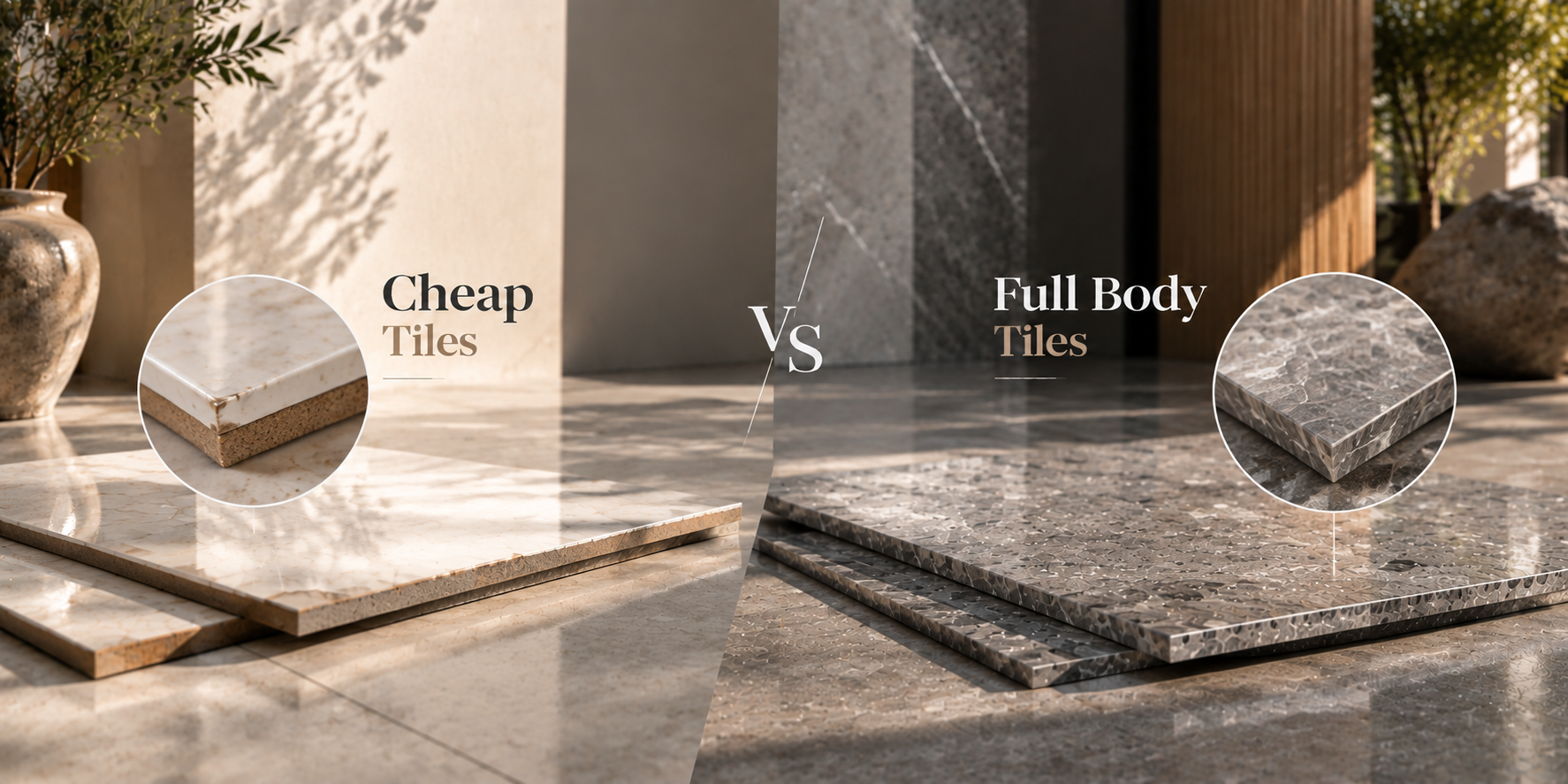
In the context of architectural specifications, full-body vitrified tiles represent an interesting category. In essence, they are a type of vitrified tiles that have the same consistency and pattern throughout the material.
This attribute is particularly advantageous since the damage to the surface is not visible unless there is a significant change on the surface. As a rule of thumb, the application area determines the suitability of full-body vitrified tiles.
Some of the application areas for full-body tiles include:
- • Commercial buildings and offices
- • Showroom floors and walls
- • Corridors and high-traffic areas
- • Large residential and commercial projects
It is essential to note that the performance of the tiles depends on a variety of factors. Some of them include:
- • Quality and specifications of the tiles
- • Surface finish and thickness
- • Application needs and traffic
5. Application of modern flooring: A buyer’s perspective
Image alt text: Contemporary commercial building featuring large-format vitrified tile flooring
The selection of modern flooring involves several considerations. At the same time, architects, developers, and property managers should make the choice based on the intended application. For instance, residential buildings and apartments have different needs compared to commercial properties.
The modern construction projects call for an innovative approach to construction and design, which requires a close look at the material properties.
In essence, residential buildings and apartments require higher comfort levels, while shops, corridors, and commercial buildings necessitate a higher degree of technical specifications.
Finally, developers and architects should consider tiles’ size and format, including 600×1200 mm, and 800×800 mm, and their suitability based on the surface, preparation, transportation, and installation needs.
6. Comparison of Kota stone and full body vitrified tiles
While comparing Kota stone and full-body vitrified tiles, it is essential to understand that both products serve different needs and purposes. In essence, the choice between the two depends on the buyer’s needs, specifications, and intended application.
Below are the primary aspects that highlight the differences between the two building materials.
| Factor | Kota Stone | Full-Body Vitrified Tiles |
|---|---|---|
| Material | Natural limestone | Vitrified tiles |
| Appearance | Unique natural appeal | Vast choice of appealing patterns |
| Design and format | Varying natural patterns | Vast range of options |
| Installation needs | Requires suitable laying and finishing | Requires appropriate floor preparation |
| Maintenance | Usage and finishing determine it | Depends on the finish and application |
| Selection criteria | Appealing natural design and purpose | Specialised applications and design |
7. Selection of modern flooring: A buyer’s guide
As mentioned, buyers should consider a wide range of criteria when selecting modern flooring. In essence, the choice of ceramic tiles or full-body vitrified tiles should be based on the following four considerations:
Application: This entails understanding the intended use of the building or structure, including residential, commercial, or institutional usage.
Performance: Inter alia, buyers should review the technical specifications, including water absorption, surface abrasion, and skid resistance.
Installation: Floor preparation, tile size, and layout affect the suitability of the application. In essence, buyers should ensure that there are appropriate installers and tools.
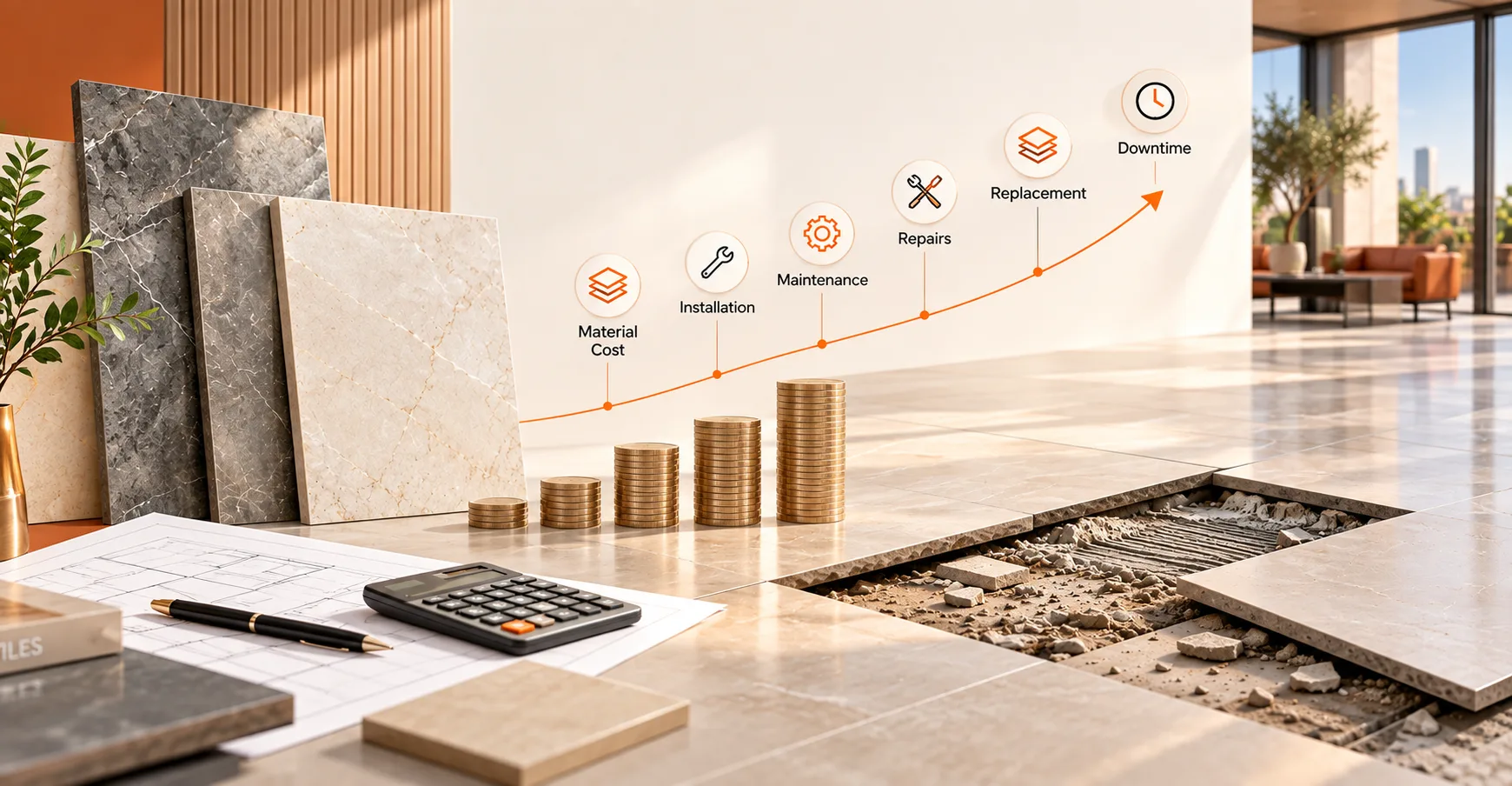
Lifecycle: It is critical to review the overall lifecycle costs and benefits of the selected material.
Conclusion
Evolution of flooring in India shows that different materials have unique specifications and application needs. In essence, the choice between Kota stone and full-body vitrified tiles depends on the intended use and buyer’s needs.
Therefore, in terms of modern flooring, it is essential to compare the materials and choose the one that fits the application. For instance, residential buildings necessitate different materials from commercial structures. For more information on residential and commercial flooring, browse through the products at Hawk Granito.