Natural stone versus engineered flooring: Does 15mm full body tile fit? Keywords
Introduction: Selection of natural and engineered flooring
The comparison of natural and engineered flooring solutions is of great importance because of the impact on the final appearance, service life, installation methods, and maintenance requirements. 15mm full body tiles present an alternative for buyers searching for uniform material composition and modern flooring for home and commercial construction sites.
Both natural stone and full body vitrified tiles reflect their unique characteristics during production. Understanding what distinguishes them supports the efforts of homeowners, architects, and project owners, who seek to identify flooring materials, which fit their particular requirements.
1. Natural stone vs engineered flooring: Identifying the difference
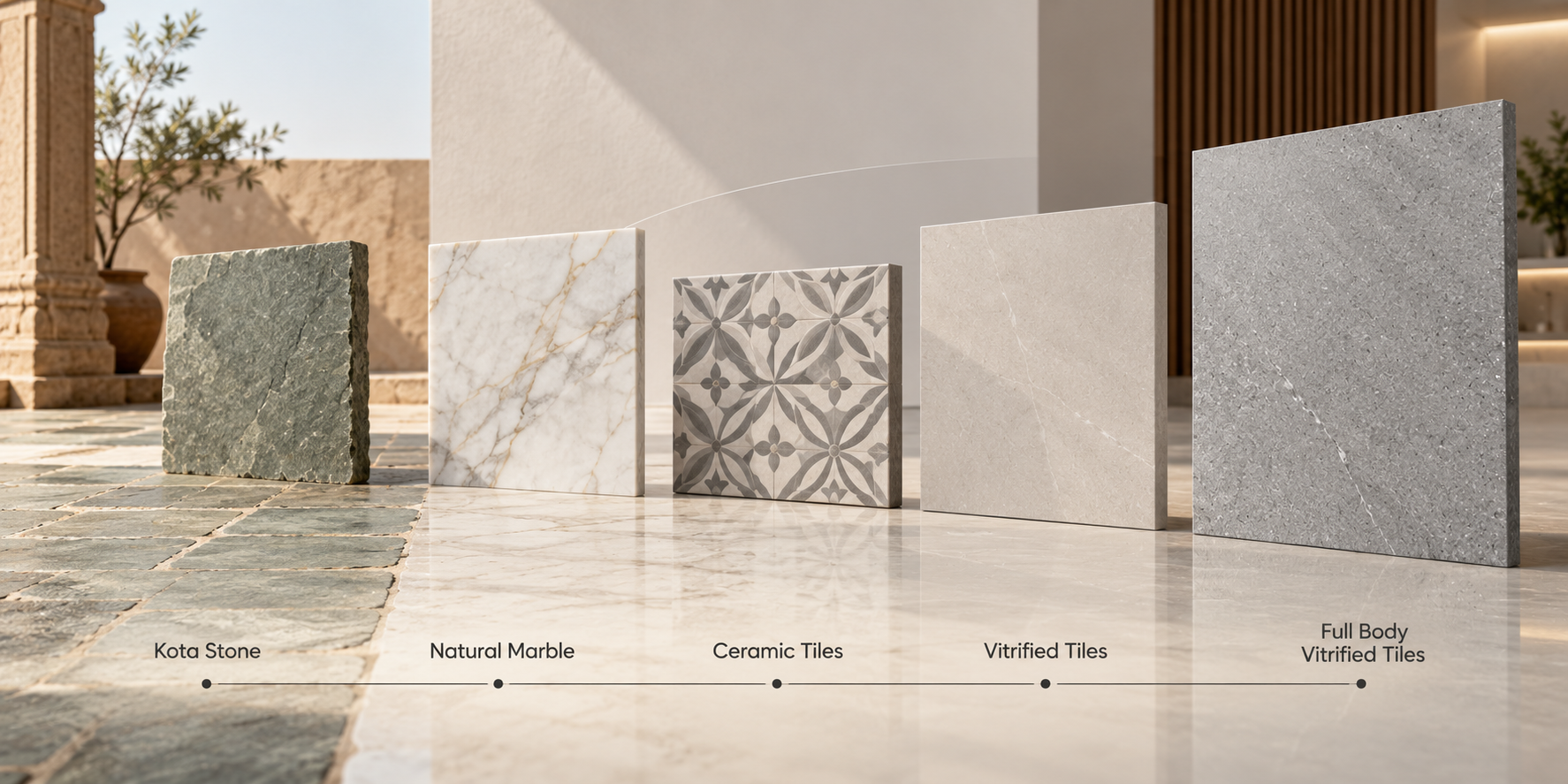
Natural stone flooring incorporates such materials as Kota, marble, granite, and others. Individual slab or tile elements possess patterns, which originate in their formation process.
Engineered flooring products incorporate raw materials, which manufacturers process to obtain a particular structure. In full body tiles, such characteristics as colour or composition extend to the body of the tile.
The main difference between natural and engineered flooring concerns a product’s origin, its appearance, production process, and specifications.
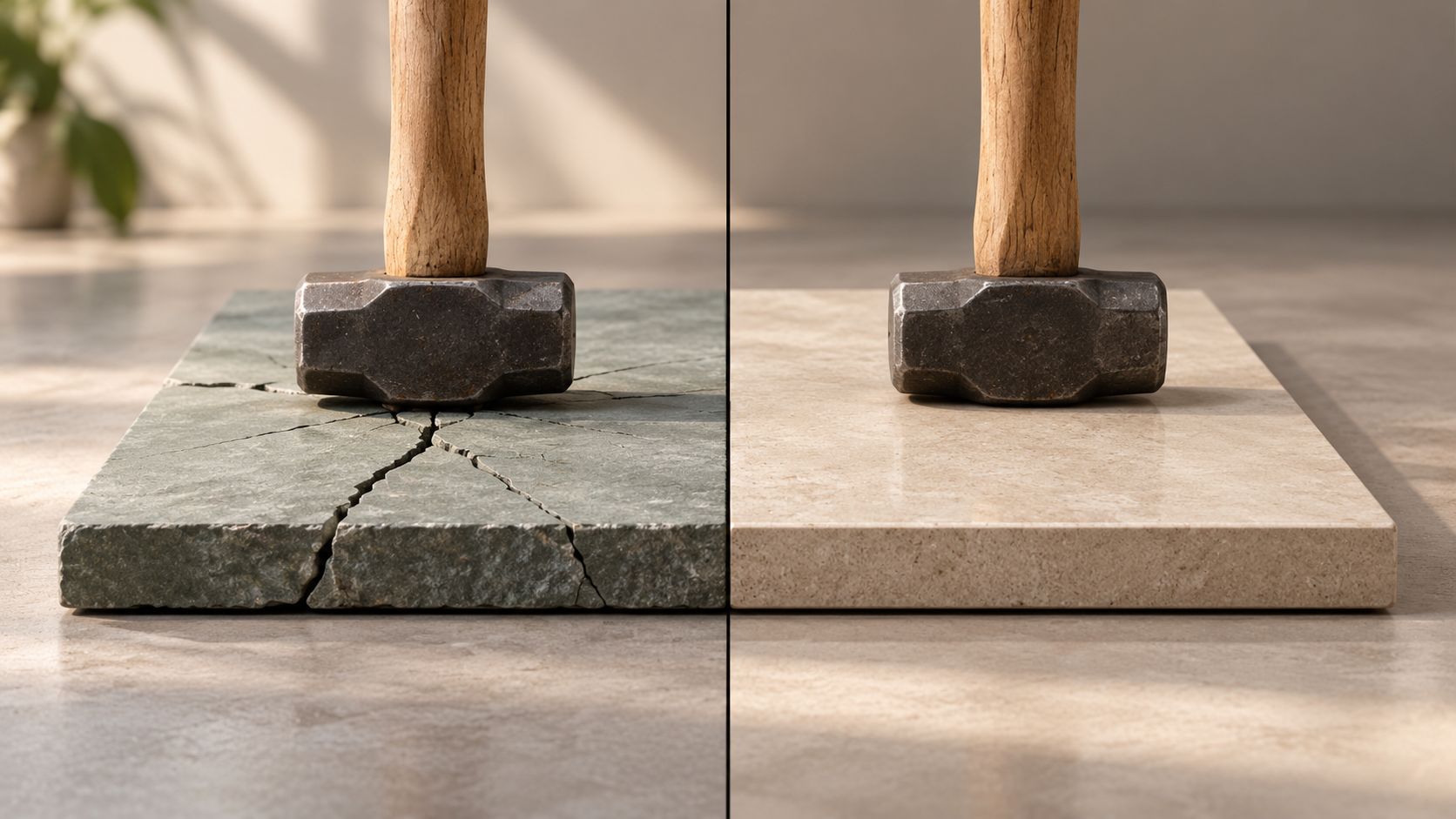
Image ALT: Natural Kota stone flooring compared to modern 15mm full body vitrified tiles.
2. What makes natural stone different?
Natural stone has been a preferred flooring material due to its authentic material character and distinct appearance.
However, its appearance depends on the stone type, its mineral composition, and surface structure. In addition, distinct natural stone types require various installation and maintenance approaches.
Before purchasing natural stone, buyers should note the following:
- Pattern variation: The material’s patterns and colours may vary per element.
- Installation: Specific instructions relate to cutting, levelling, or finishing the stone.
- Maintenance: Particular attention should be paid to surface treatment or cleaning agents.
- Application: The material’s suitability depends on the intended purpose and its exposure.
Natural stone is suitable for applications, which value the authenticity of material character.
3. What makes 15mm full body tiles worth considering?
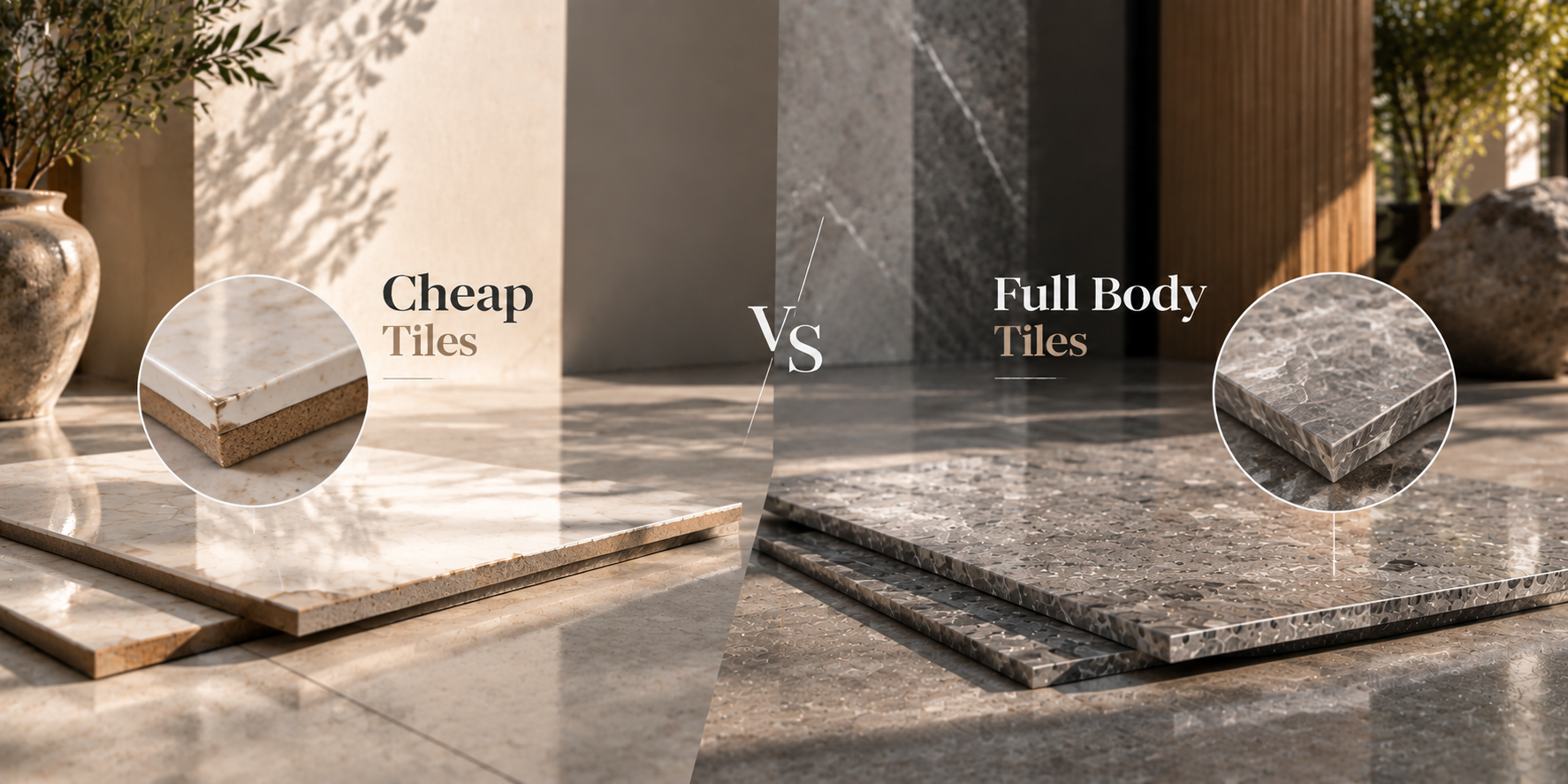
15mm full body tiles present a modern alternative, which combines a certain thickness and a manufactured tile with a uniform material composition across its body.
Such tiles’ applicability depends on the manufacturer’s specifications, the intended purpose, and installation requirements.
They offer the following benefits:
- Uniform appearance: The material composition across the tile body allows creating a homogeneous surface colour, which may resemble the chosen material.
- Manufactured dimensions: The specified technical specification concerns the product size, its weight, and thickness.
- Design versatility: The availability of various patterns and finishes fits diverse architectural styles.
- Commercial applications: Suitable material grades fit for offices, showrooms, corridors, or other purposes with due consideration for their performance requirements.
However, a buyer should understand that greater thickness does not guarantee enhanced performance; rather, the technical specification should help identify its applicability. In general, the tile product range includes various sizes and finishes, which correspond to commercial or residential applications.
Image ALT: A close-up of a 15 mm full body vitrified tile showing its thickness, edge, and texture.
4. Installation and maintenance: what should be buyers consider?
Natural and engineered flooring products have their particular features associated with the installation and maintenance. They are connected with preparing of the surface, using particular materials like adhesive and the professional skills of installers.
In relation to maintenance, natural stone flooring requires special attention to its surface treatment, whereas engineered tiles incorporate specific cleaning solutions.
Before purchasing, buyers should compare the following:
- Surface preparation: Particular attention should be paid to the requirements for a given surface type.
- Installation materials: select the materials, which meet the performance requirement of selected the tile grade.
- Cleaning: follow the recommended cleaning practices in order to prolong the service life of the surface layer.
- Repairs: ensure the availability of spares or tiles of the same batch, which fits the required specifications.
Properly organized installation and maintenance practices become the basis for the long service life of any flooring material. Explore installation materials for tile projects.
5. Which flooring is better for commercial projects?
Commercial site expose the chosen flooring to distinct challenges depending on the traffic intensity, equipment, or operational needs. Natural stone fits applications, which seek to enhance the visual appeal of the interior or exterior space.
Specified full body tiles correspond to the requirements of commercial construction sites, which value engineered dimensions and coordinated material composition.
For offices, retail stores, hotels, and showrooms, the buyers should consider the following factors:
- Traffic and loading: The more intensive the traffic, the higher the tile grade should be.
- Abrasion and surface structure: The buyer should pay attention to the pressure level and its effect on the surface structure.
- Water absorption and slip resistance: The requirements may vary depending on the level of exposure and traffic intensity in a specific zone.
- Dimension and installation: A particular grade is suitable for the specific purpose and installation needs.
- Maintenance and replacements: Account for the materials and procedures for cleaning and repairs.
The appropriate choice emerges as the one, which fits the documented requirements for a commercial project.
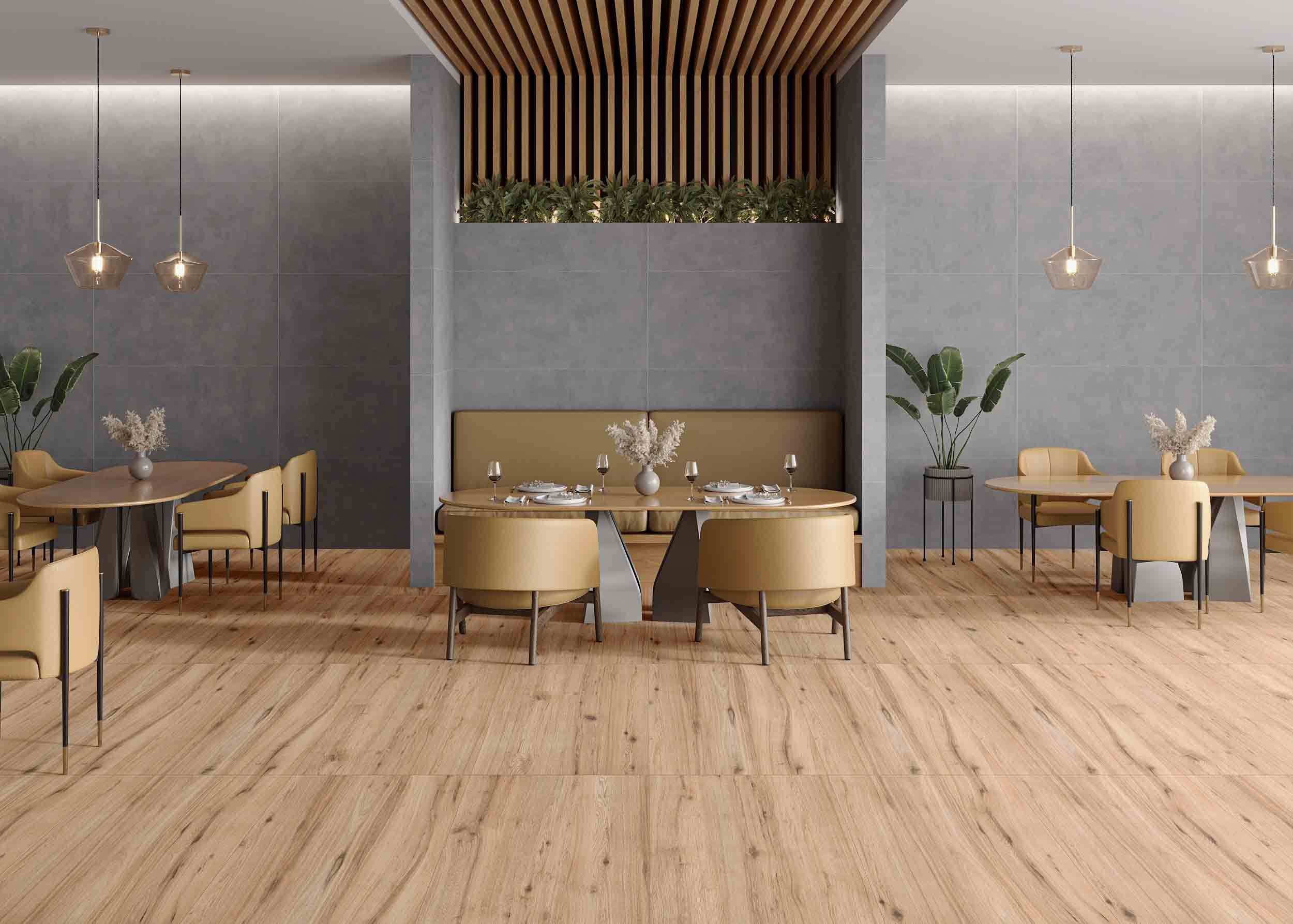
Image ALT: Modern commercial interior featuring full body vitrified tile flooring with a refined stone-look finish.
6. Natural stone vs 15mm full body tiles: making a final decision
There is no universal winner in the natural vs engineered debate. Rather, the choice emerges as the one, which fits the intended purpose, the project’s requirements, and budget considerations.
Natural stone fits those, who seek authentic patterns and material character. 15mm full body tiles offer a valid alternative with their particular manufacturing process and material composition.
Before purchasing, buyers should request product samples, which fit the intended purpose, clarify installation requirements, and identify the total cost rather than compare material prices. Use the tiles calculator to estimate the required quantity for your project.
Conclusion: choose flooring according to your needs
Natural stone and 15mm full body tiles present distinct benefits for residential and commercial construction sites. The former fits those, who seek authenticity and diversity in material composition, as opposed to the latter, which offers a manufactured alternative.
In the pursuit of the best purchase decision, the consideration of appearance, performance, and cost becomes the basis for the final decision.
Explore Hawk Granito’s collection of full body tiles and choose the right material for your home interiors or commercial construction projects. Make the final selection according to the actual needs and build your flooring specification. Browse the Hawk Granito catalogue for additional product options.