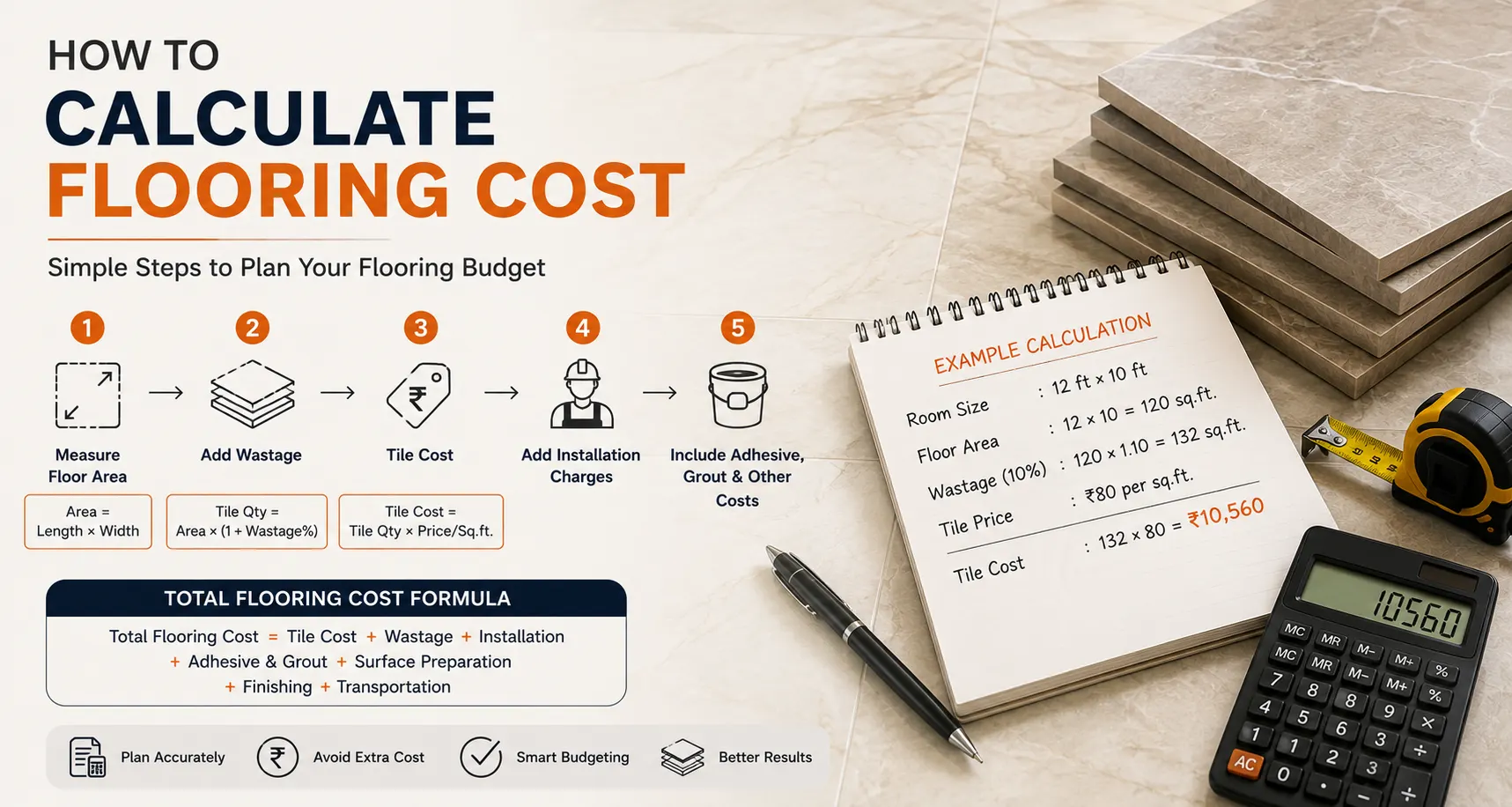
How to Calculate Flooring Cost
Planning a new floor can be much more straightforward with an estimate of the total cost before purchasing your materials. While the price of the tile is not the sole determiner of the final budget, you should also consider the cost of the tile wastage, installation, adhesive and grout, skirting, transportation and other costs in preparation work.
A simple calculation can help homeowners, builders and designers estimate their flooring budget more reasonably.
Step 1: Measure the Flooring Area
The first step is to calculate the floor area.
Floor Area = Length x Width
For instance, if a room is 12 feet long and 10 feet wide:
12 × 10 = 120 sq. ft.
For a room which is not perfectly rectangular, split the room into several rectangular parts, and calculate the area of each individually.
Step 2: Calculate Tile Quantity
With the calculated area, you now need to add in some wastage.
For a simple layout, you can get away with as low as 5% extra. More complex layouts or patterned layouts will need at least 10-15% or higher.
For instance, a floor of 120 sq. ft. with 10% wastage:
120 × 1.10 = 132 sq. ft.
so 132 sq ft of tile will be needed.
Step 3: Cost of Tiles
This is multiplied by the amount of tile needed .
For example, The price of tile is ₹80 per square foot and you need 132 square foot of tile:
132 x 80 = 10560
This will give you a material cost estimate for tile.
Do bear in mind however, that the price of a tile can vary widely depending on the type, size, finish, pattern, quality, and manufacturer of the tile.
Step 4: Add Installation Charges
Another vital element of your flooring budget is the labour. Installation costs can vary considerably based on a lot of factors like:
Floor area
Tile format
Installation pattern
Surface condition
Cutting requirements
Location factor
Installer experience
While larger format tiles may come with higher handling and installation costs due to their size, complex patterns can incur additional charges due to the higher cutting effort involved.
Step 5: Include Adhesive and Grout
Depending on the type and method of installation, you may have to consider the costs for tile adhesive or tile grout, and the quantity necessary for the installation.
While often the smaller expenses when it comes to costs of flooring, these still have to be factored in when preparing your estimate.
Step 6: Consider Surface Preparation
The existing floor surface might also need some preparation for the new flooring to be installed, and the expenses of this preparation should factor in the total flooring cost.
Likely expenditures for surface preparation can include:
Removal of old flooring
Surface leveling
Surface repairs
Substrate cleaning and preparation
Additional waterproofing if necessary
An expertly prepared surface will ensure fewer complications further down the road during installation.
Step 7: Add Skirting and Other Finishing Costs
Finally, do not forget the cost of skirting and other finishing details.
Your final flooring budget has to include the material cost, plus the cost of work and installation needed to finish the job, not just the materials.
Simple Flooring Cost Formula
A simple formula to estimate your total flooring cost can be written as:
Total Flooring Cost = Tile Cost + Wastage + Installation + Adhesive & Grout + Surface Preparation + Finishing + Transportation
Example Flooring Cost Calculation
Assume that your room is of 12×10 feet in size.
Floor area: 120 sq. ft.
With 10% wastage: 132 sq. ft.
Say, price of tile is ₹80 per sq.ft.
Tile Cost: 132 x ₹80 = ₹10,560
Now, you can calculate installation, adhesive & grout, transportation and surface preparation costs to reach an estimate of your flooring project.
For a quicker estimate, you can use the Hawk Tiles Calculator to calculate the approximate area and required tile quantity.
How to Reduce Flooring Costs
While you may not always want to simply go for the cheapest tile price to stay on your budget, smarter planning will surely help you to stay within your limits.
Make sure that calculations for the area are correct, choose a proper tile size and reduce unnecessary, avoidable wastage. Remember to compare the total project cost and not just the materials price.
Additionally, buying enough tiles in one batch will allow you to make use of the same stock and have spares in case of accident or damage.
Final Takeaway
A flooring budget begins with a precise calculation of the floor area, and proceeds with estimating the quantities of tiles necessary for the job, factoring in wastage.
The material cost will form a large portion of your total bill, but be sure to calculate the complete project cost.
Remember to add in the cost of skirting, adhesive, grout and transportation. Lastly, measure twice to be able to cut wastage, and ensure you do not incur additional expenditures during the course of the project.
Measure the area, factor in wastage, and add in every possible expense before finalizing your tile purchase.