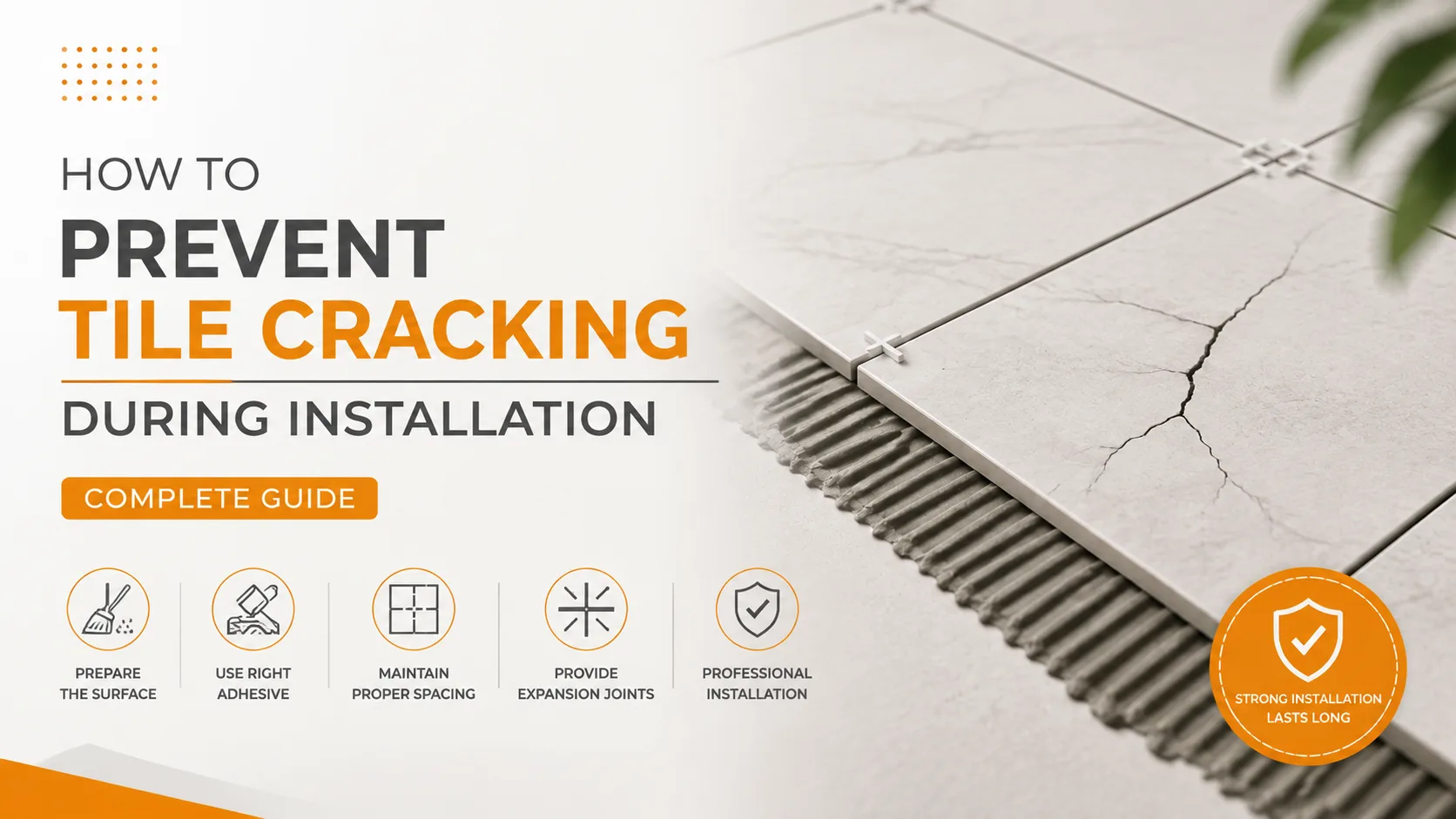
How to Prevent Tile Cracking During Installation: Complete Guide
Tiles may seem like a lasting investment for your home or business. However, brittle tiles can still begin to crack unexpectedly.
The issue may be caused by brittle tiles. Other factors can contribute to the problem such as surface preparation, tile adhesive, uneven flooring, moisture and other reasons.
Learning how to prevent tile cracking will help the owner, builder and contractor to take the right measures.
Why Does Tile Start Cracking After Installation?
Cracked tiles can occur for the following reasons:
Unstable and uneven floor surface
Improper tile adhesive application
Incorrect tile spacing
Heavy pressure on the tiles
Moisture underneath the tiles
Improper cutting and installation
Lack of expansion joints
Although choosing quality tiles is important, the key to avoid cracks is the installation.
1. Prepare the floor surface correctly
A stable and even floor surface is the basis for a successful tile installation.
Before you start the procedure, make sure that the following aspects are taken care of:
Dust and dirt removal
Surface cracks repair
Uneven spots levelling
Floor drying
The stress from unstable and uneven surfaces can lead to tiles being under pressure. It can cause them to crack later.
2. Choose the Suitable Tile Adhesive
The process of applying tile adhesive is an essential step in the entire procedure.
Besides, it is of particular importance to choose the right tile adhesive in terms of:
Tile size
Tile material
Installation area and
Indoor/outdoor placement
For instance, large size tiles, such as 600×1200 tiles need an appropriate amount of adhesive due to their increased surface.
3. Leave Expansion Joints Between Tiles
Tiles should not be placed directly against each other.
The gap between tiles allows the tiles to expand and contract with temperature changes. Leaving the space between tiles is also a good practice for the pressure distribution.
It is recommended to leave a gap that is appropriate for tile size, location and other aspects.
4. Pay Attention to Large Size Tiles
Large size tiles are a popular option for an upscale look.
However, they require higher attention during the procedure.
Make sure that the following aspects are considered while installing large size tiles:
Avoid dropping the tiles
Ensure full coverage of adhesive
Use tile spacers
Pay attention to the pressure
Such tiles are more sensitive to pressure points that can cause them to crack.
5. Check the Floor Level Beforehand
An important question is: Can uneven floor cause tiles to crack? The answer is affirmative.
Tiles placed on an uneven surface will be under pressure. It can lead to tile breakage.
Professional contractors know how to check the floor level, tile placement, adhesive thickness and other aspects.
6. Give the Tiles Time to Set
Tiles should not be disturbed after the procedure is completed.
It is important to refrain from placing pressure on the tiles until the adhesive is fully cured.
In addition, it is forbidden to walk on the tiles, place furniture and do other activities. The curing process also includes tile cleaning.
What Are the Common Mistakes When Installing Tiles?
Several mistakes eliminate the possibility of having high-quality tiles for a long time. They include:
Floor surface irregularities
Low-quality tile adhesive
Failure to prepare the floor surface
Insufficient tile adhesive coverage
Incorrect tile cutting
Failure to leave expansion joints
Such mistakes should be avoided in order to achieve a high-quality result.
How to Choose the Tile Material for Crack Prevention?
Selecting the right tile material is of paramount importance for the procedure.
It is recommended to consult our online catalog to choose the right option in terms of:
Tile thickness
Application area
Tiles’ surface
Quality grade
Installation method
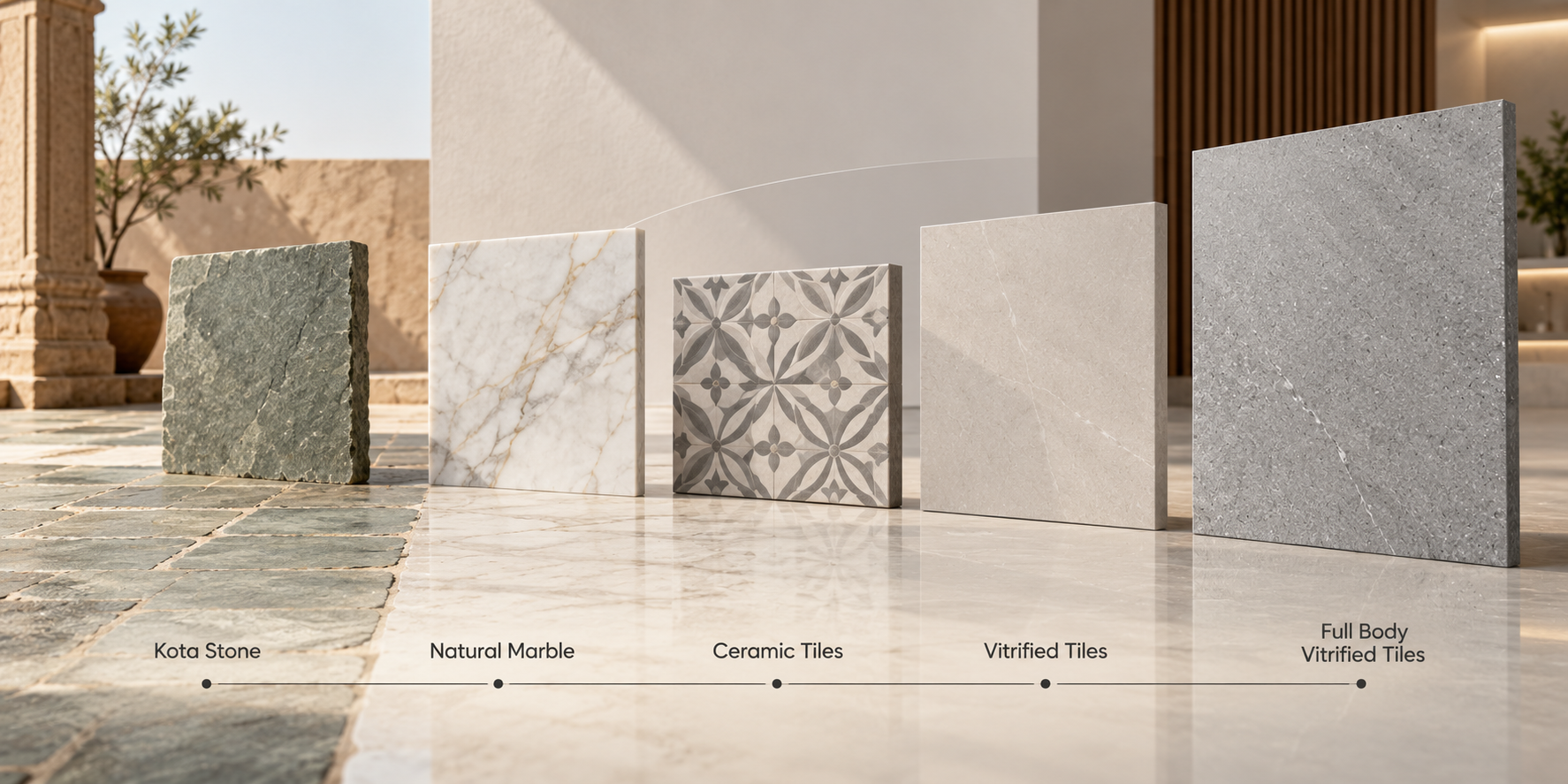
Tiles such as full body vitrified tiles and glazed vitrified tiles are good solutions for floor applications.
Final Notes About Tile Cracking and Its Prevention
A tile is a high-performance and aesthetic solution for both residential and commercial buildings.
Following the above-mentioned guidelines will allow the owner to utilize the advantages of tiles for a long time.