Evolution of Tiles: From Traditional Flooring to Advanced Modern Tile Technology
Primary keyword: Evolution of Tiles
Introduction: How Tiles Transformed Through Time
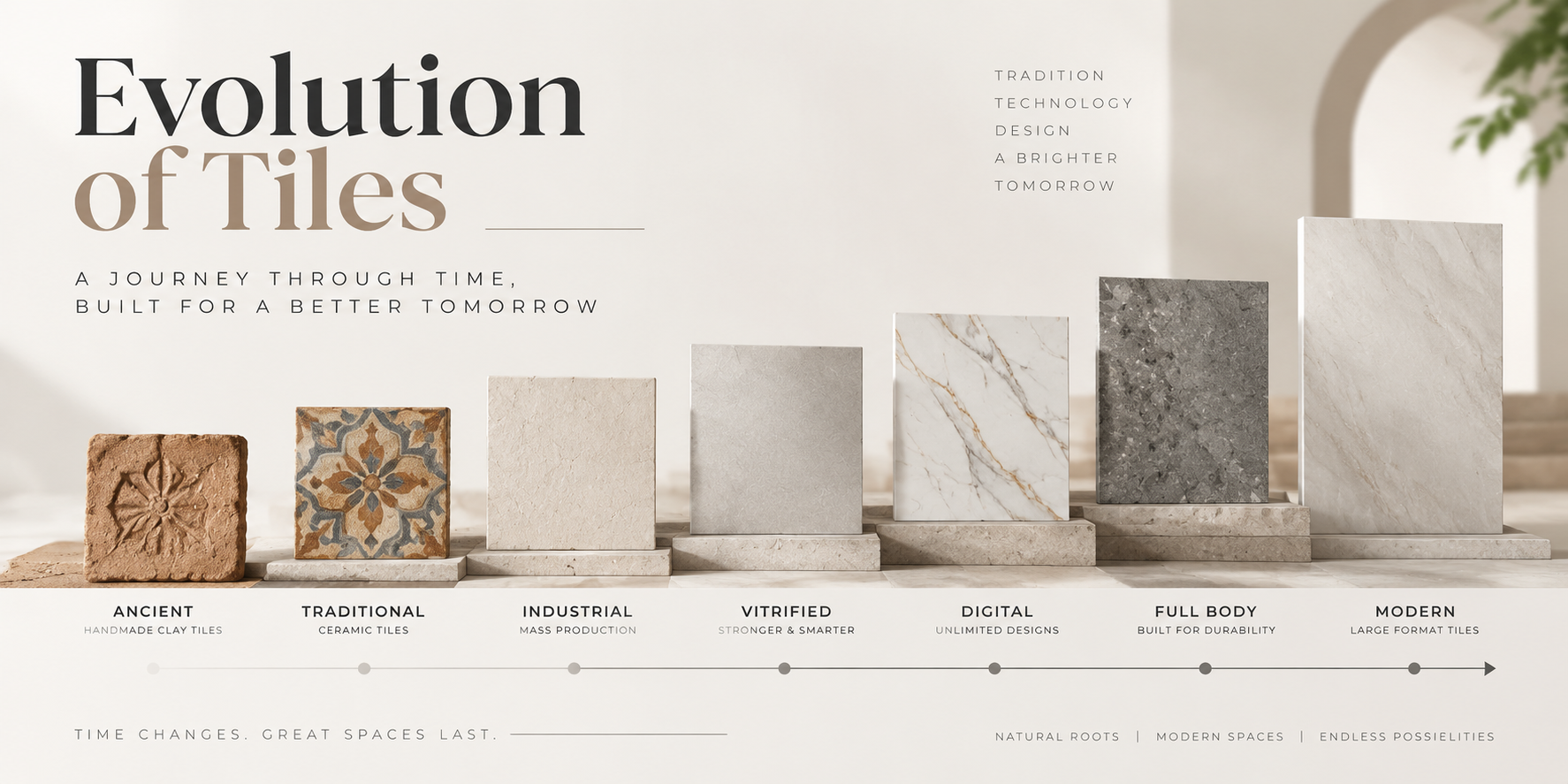
The evolution of tiles demonstrates the advancements in architectural developments, technological developments, and interior designs through the years. Tiles have transformed significantly ranging from traditional handmade and earthy tiles to the modern porcelain tiles and vitrified advanced tiles.
This content will highlight the evolution of the tile manufacturing process, technological developments that enhanced tile production qualities, and modern tiles’ significance.
The Ancient Beginning of Tiles
Throughout history, tiles have been used as floor finishes, primarily in architectural monuments, and their development has gone through a significant process over time. Ancient people used handmade tiles, usually crafted from natural clay, as a decorative and construction material.
The main techniques used to make ancient tiles were:
- - Natural clay forming
- - Sun drying
- - Firing
- - Hand-painting
These tiles were mostly used to:
- - Paint wall decorations
- - Temples
- - Palaces
- - Public buildings
The main purpose of these handmade tiles was artistic expression and not a particular technical property.
Visual placeholder alt text: Ancient handmade clay tiles used in historical architecture
Growth of Ceramic Tile Manufacturing
It is worth noting that the production of ceramic tiles and bricks has significantly evolved and improved over the years. With enhanced technologies, ceramic tiles acquired a standard range of applications from the architectural structures.
Key characteristics that were enhanced ranged from strength, water resistance, and surface finishing. Ceramic tiles initiated to be used in:
- - Residential buildings
- - House kitchens
- - Bathing areas
- - Wall decorations
Modern tile manufacturers have invested significantly in developing advanced tile finishing technology to add more design options for residential and commercial properties.
Industrial Revolution and Mass Tile Production
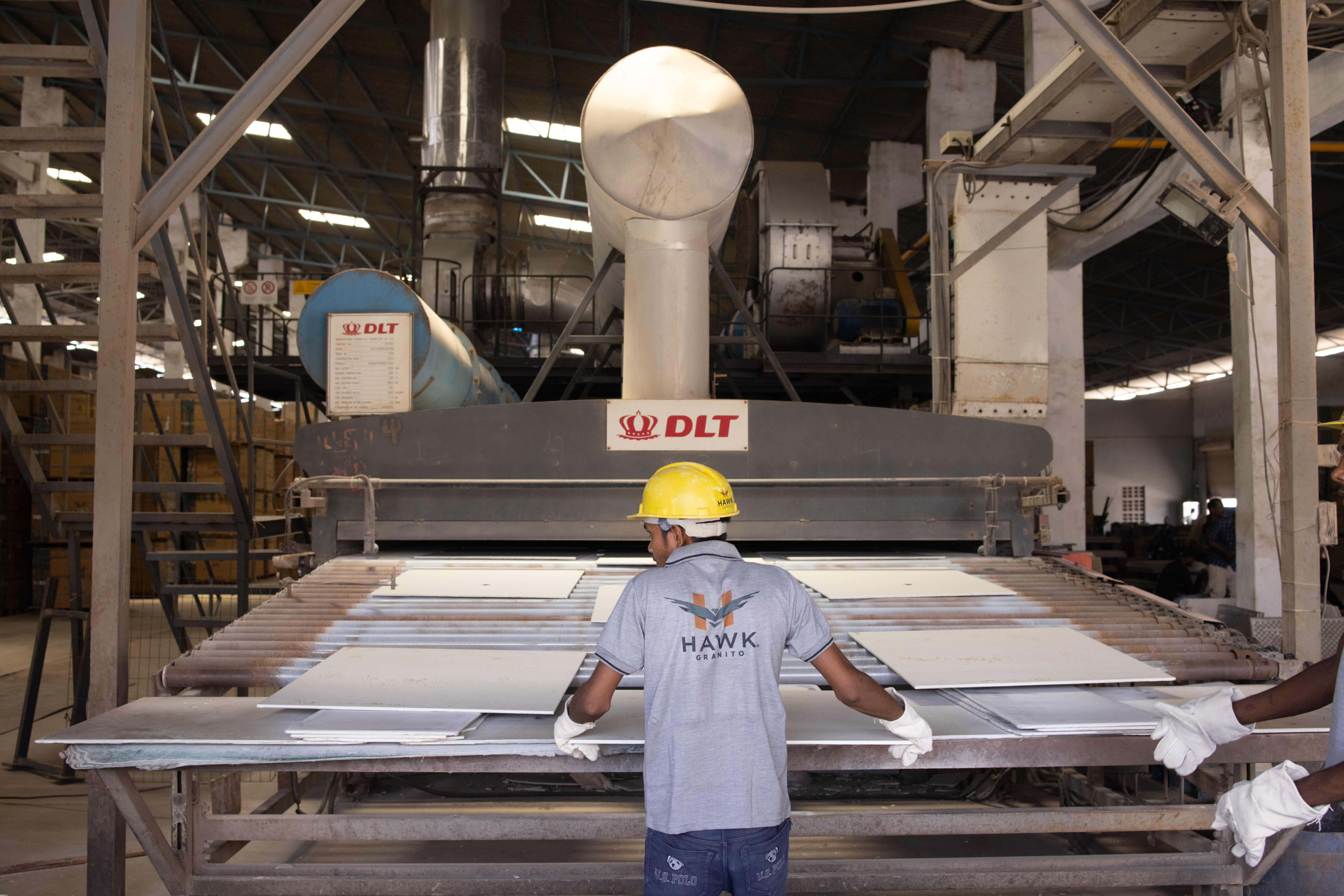
Modern tile production involved significant industrial revolution changes, enhancing machine-made tile production processes.
Key changes involved:
- - Automatic pressing technology
- - Advanced kilns
- - Standardized formats and sizes
- - Modern surface finishes
Industrialization made it possible to produce tiles in larger scales and improved the architectural as well as residential properties of tiles.
Visual placeholder alt text: Modern ceramic tile manufacturing factory with automated production lines
Introduction of Vitrified Tiles
Among the significant developments in the tile production history, the introduction of vitrified tiles is one of the most notable. Being advanced category of ceramic tiles produced with application of ultra-modern high-tech production techniques allowing achieving higher technical properties and larger size, they represent an excellent choice.
Vitrified tiles offer:
- - Enhanced durability properties due to low levels of water absorption
- - Improved stain resistance
- - Larger size specifications
This invention of tile production history resulted in the extensive use of vitrified tiles in:
- - Hotels
- - Offices
- - Shopping malls
- - Modern houses
Rise of Digital Printing Technology
One of the key developments in tile production history is the invention of digital printing technology. This technology ensured that ceramic and porcelain tiles gained a reputation as a sophisticated and premium construction material globally.
This technique has transformed the architectural and construction industry by providing an extensive range of creative options, from natural materials to graphic design. Advanced digital printing technology has enabled the replication of glazed vitrified tiles designs including:
Advanced digital printing technology has enabled the replication of:
- - Natural stones
- - Marble designs
- - Wood finishes
- - Concrete structures
Such properties have enhanced the demand for tiles with both technical and designer finishing in:
- - Commercial buildings
- - Residential properties
Visual placeholder alt text: Digital printing technology creating realistic marble design tiles
Development of Full Body Tiles
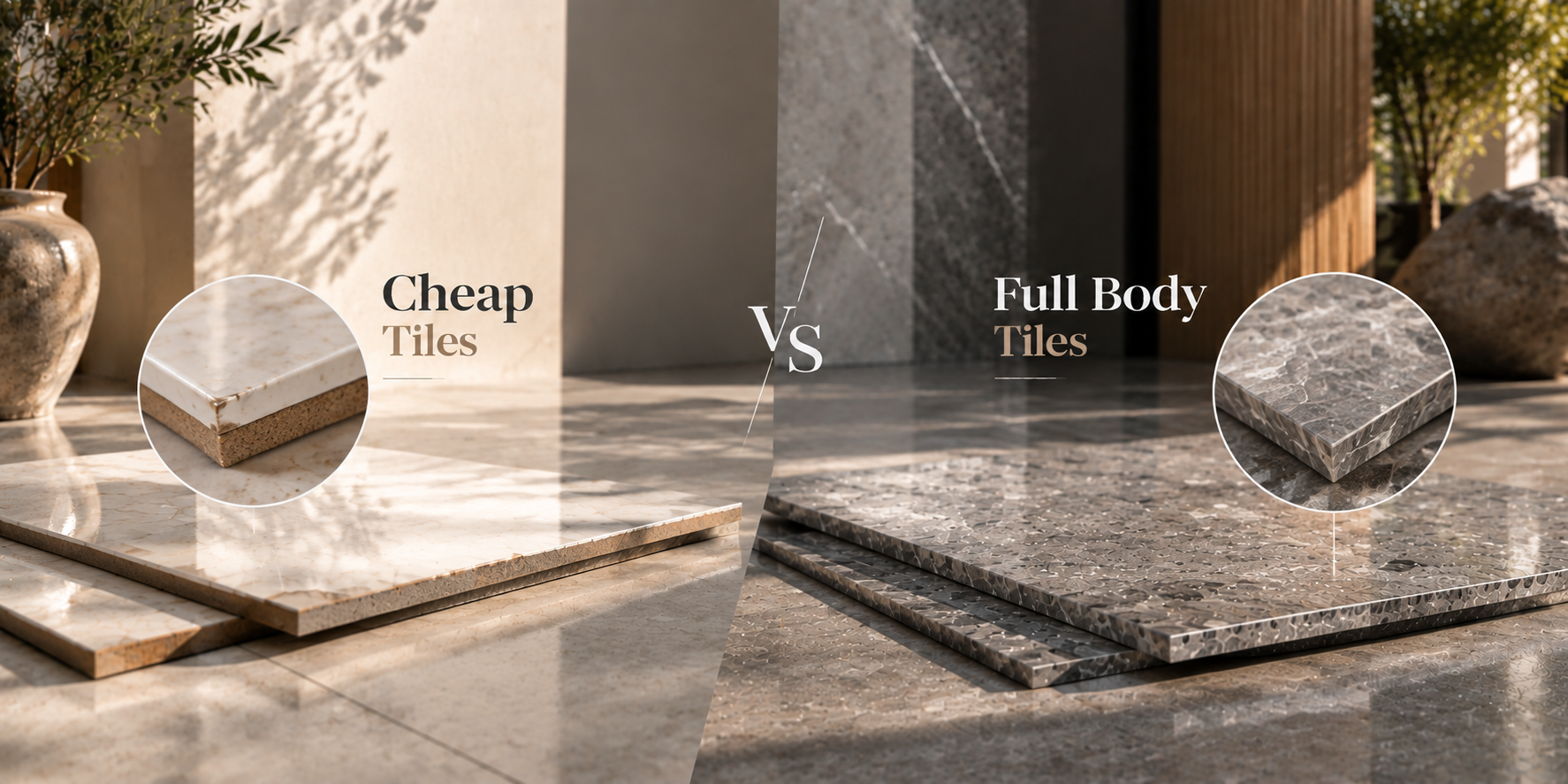
Another key development and the evolution of floor tiles is the introduction of full body tiles. This production technology ensures that tiles are produced using consistent colors and material throughout the tile body.
This advancement in tile manufacturing process allows full body tiles to possess enhanced wearing properties allowing their use in:
- - Commercial buildings
- - Showrooms
- - For areas demanding extensive use and traffic
Such tiles are recommended for large-scale projects in:
- - Hotels
- - Residential properties
- - Offices
Evolution of Large Format Tiles
Due to the increasing trend of modern and minimalistic architectural properties, the use of large size tile formats has significantly increased.
Tile sizes such as:
- - 600x600 mm
- - 600x1200 mm
- - 800x800 mm
Have gained popularity due to the seamless finishing visual appeal.
Large format tiles offer enhanced design and comfort, making them the preferred choice in:
- - Luxury buildings
- - Hotels
- - Offices
- - Modern commercial properties
Visual placeholder alt text: Large format porcelain tiles installed in a modern luxury interior
Smart Manufacturing and Advanced Tile Technology
Modern tile manufacturing companies utilize advanced technologies to achieve the most appropriate production conditions ensuring that the resulting tiles meet the quality and specification standards required. These companies are taking advantage of modern innovative technologies, including:
Modern innovative technologies include:
- - automated production lines,
- - advanced digital surface finishing,
- - precision cutting systems,
- - and sustainable production technologies.
In order to meet the demand for high-quality tiles, modern manufacturers are improving production technologies and enforcing more stringent quality control.
Modern Tile Categories
The evolution of tiles has led to the wide range of modern tile categories currently in use, and each is applied for specific design and construction purposes.
Ceramic tiles:
These are applied primarily for light-wall decorations and residential buildings
Vitrified tiles:
This type is recommended for residential and commercial buildings
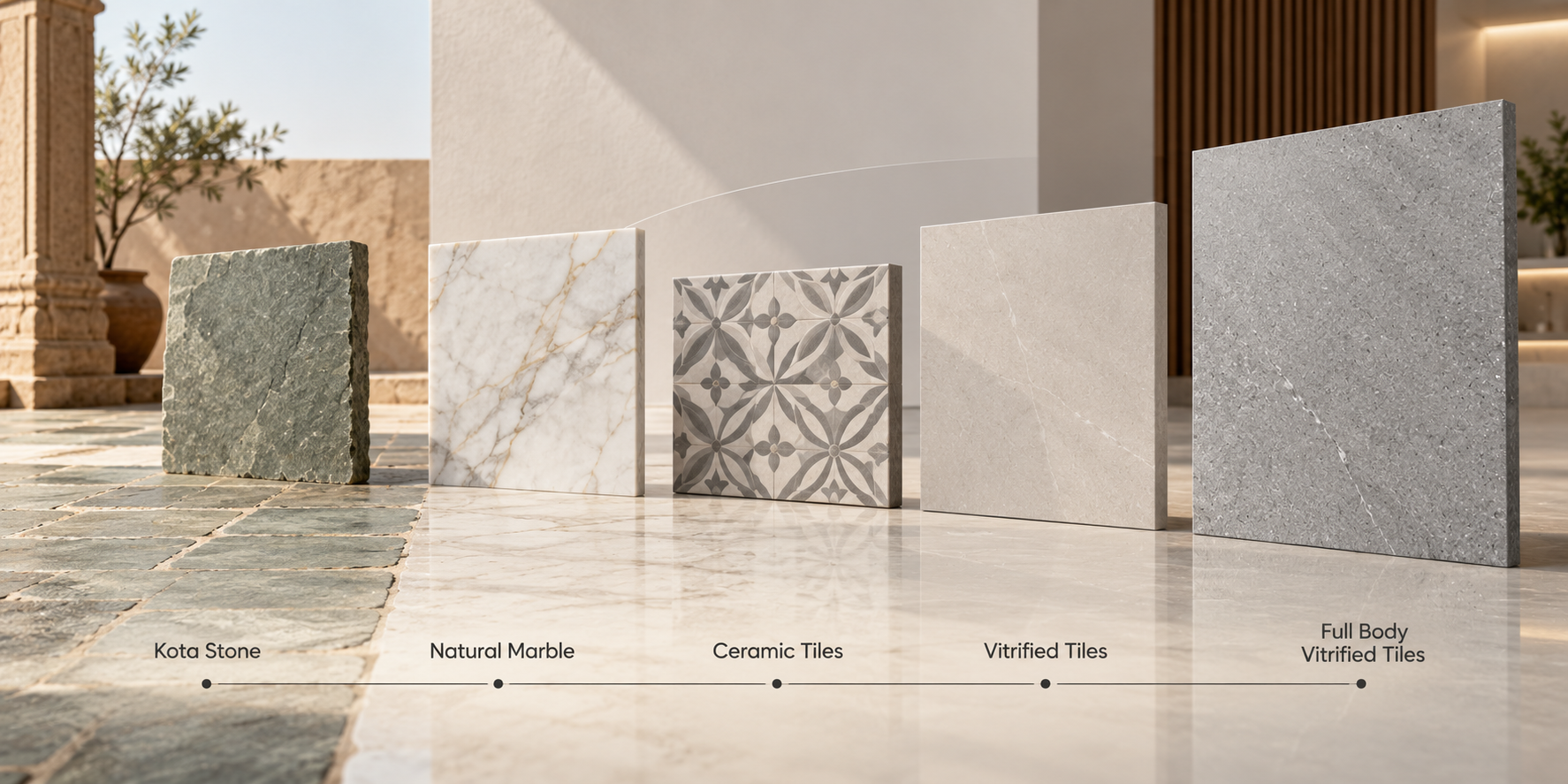
Glazed Vitrified Tiles (GVT):
Mostly designer application, this category offers advanced design and surface finishes
Full body tiles:
Mostly used in commercial properties, residential buildings, and for large-scale projects
Tiles are essential for residential and commercial properties since they offer enhanced durability and design flexibility for both indoor and outdoor applications. The evolution of tiles has significantly contributed to the modern architectural developments and transformed human lifestyles.