Introduction: The Cost of Tiles Includes More Than Just the Purchase
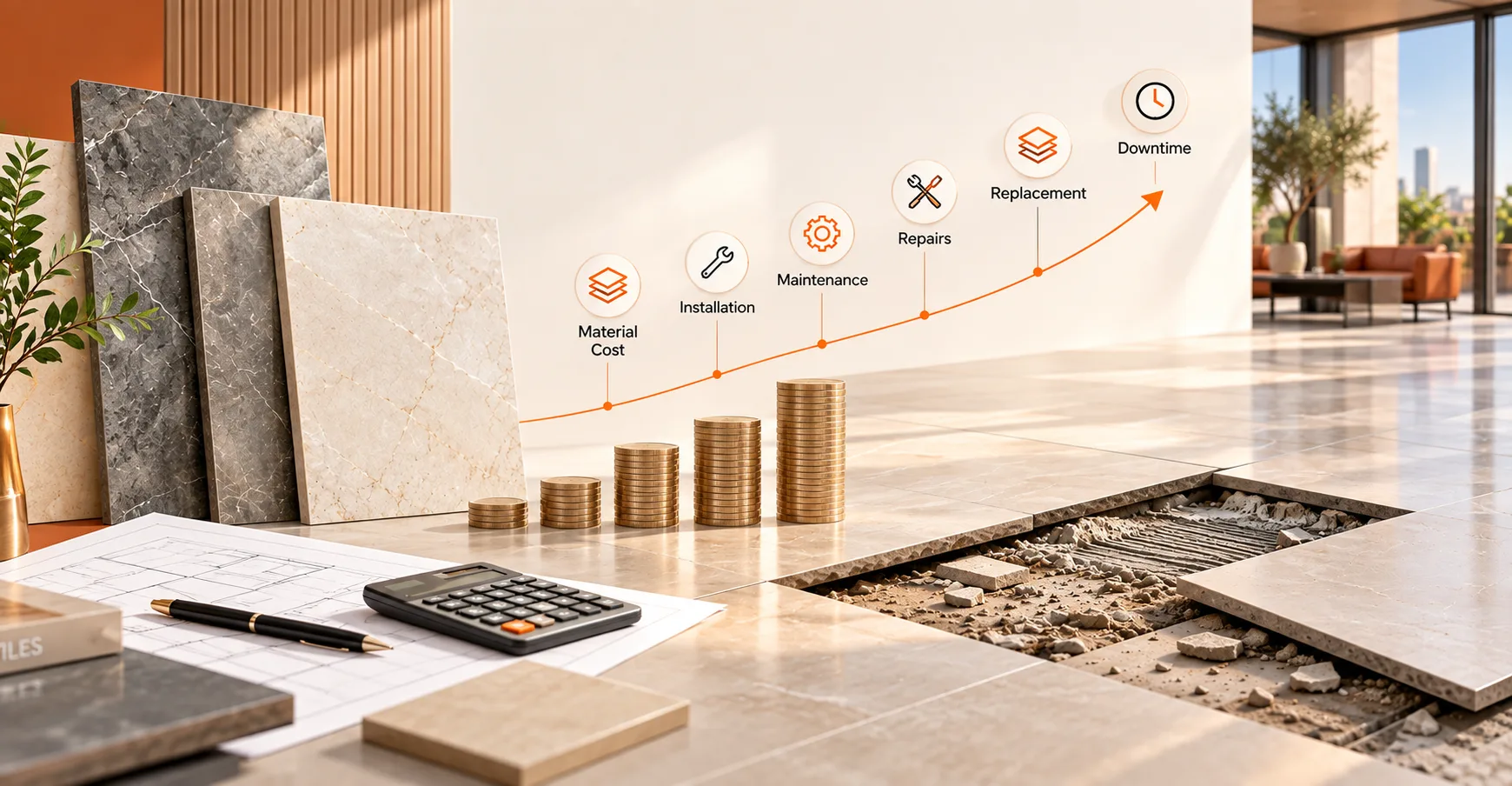
When buying tiles, apart from the obvious costs associated with the purchase, customers often do not consider the fact that the price of tiles replacement may also include a number of additional costs. Installation, waste, maintenance, repair, replacement, and downtime are some of the expenses that may be incurred when buying and installing new tiles.
For developers, architects, commercial buyers, and project owners, this analysis can help form a more realistic flooring budget and reduce additional costs.
Although a cheaper product may have a lower purchase price, the right choice also includes considerations of specifications, intended applications, performance and service life.
Why Tile Replacement Cost Matters
In the context of tile replacement, the value of a project also includes costs of new tiles, installation labour, removal, and surface preparation when flooring is damaged.
This becomes especially relevant in commercial buildings, hotels, offices, showrooms and retail spaces, where replacement works can also have an impact on the occupants and the regular operations.
What Is Included in the Real Cost of Tile Replacement?
A realistic appraisal should reflect the cost of the entire replacement cycle, rather than just the material price.
The overall value of such a project could also include:
- Original material purchase
- Installation and labour
- Adhesive and installation materials
- Material waste
- Removal of damaged tiles
- Surface preparation
- New tile purchase
- Re-installation
- Maintenance
- Downtime
Every project has its own requirements, which is why the final value depends on the type of construction, application, and installation.
Initial Tile Cost Versus Long Term Flooring Cost
The initial cost of the purchased tile is easy to compare but may not account for the overall value.
Some materials may require more maintenance and repairs, which adds to the initial cost. With this in mind, comparing tiles only on initial price can lead to an incomplete value appraisal.
A Simple Tile Cost Formula
The complete flooring cost equals the initial purchase + installation + maintenance + repairs + replacement + downtime
This represents a realistic formula for the complete value of flooring.
Tile Selection and Replacement
The intended application should be considered when buying tiles. A residential wall, private bedroom, hotel lobby, shopping centre, and commercial floor can all have very different requirements.
For flooring subject to high traffic, project owners should pay close attention to the material’s resistance to wear, water absorption, surface structure, thickness, and installation technology.
Why High Traffic Projects Require Special Attention
Hotels, offices, shopping centers, showrooms, airports, restaurants, and other public places are subject to significantly higher traffic than private residences.
Heavy traffic, abrasive loads, frequent operation, and maintenance can put additional stress on the floor covering.
For these types of projects, selecting the cheapest option should not be the sole consideration. The characteristics of the material, and the intended conditions of use should also be reviewed.
How Tile Wastage Adds to Project Cost
Tile wastage is another important aspect to consider. Tiles often have to be cut to fit around walls, columns, corners, and other obstacles, and the amount of material needed can often be greater than the exact floor area.
Installation Can Affect Tile Replacement
Installation quality has a direct impact on the service life of the tiled flooring.
Even high-quality material can suffer from improper site preparation or installation practices, and the overall installation process can impact the strengths of the joints and overall performance of the flooring, thereby becoming an important factor in the overall value appraisal.
Maintenance Is Part of the Real Flooring Cost
Maintenance should also be taken into account when evaluating the cost of flooring.
Residential and commercial settings often have dramatically differing needs, with increased traffic often requiring more frequent cleaning and maintenance, while the technology and equipment for cleaning may also vary depending on the setting.
Selecting a material according to its application can help to provide the required service life while reducing unnecessary maintenance burdens.
Replacement Can Cause Project Downtime
For commercial buildings, damaged flooring can require a section of the property to become temporarily unavailable to accommodate the removal and installation works.
For hotels, showrooms, and other large-scale projects, this can become a vital consideration. Even with minimal downtime, it is important to include it in the overall flooring cost calculation.
Why Matching Replacement Tiles Can Be Difficult
Replacement should also be included when purchasing. The original material may no longer be available later, while changes in collections, design, dimensions, and other characteristics can make it difficult to find matching tiles.
For large developments, keeping detailed records of the material used can ease future replacement works and the process of planning.
Full Body Tiles and Long-Term Flooring Considerations
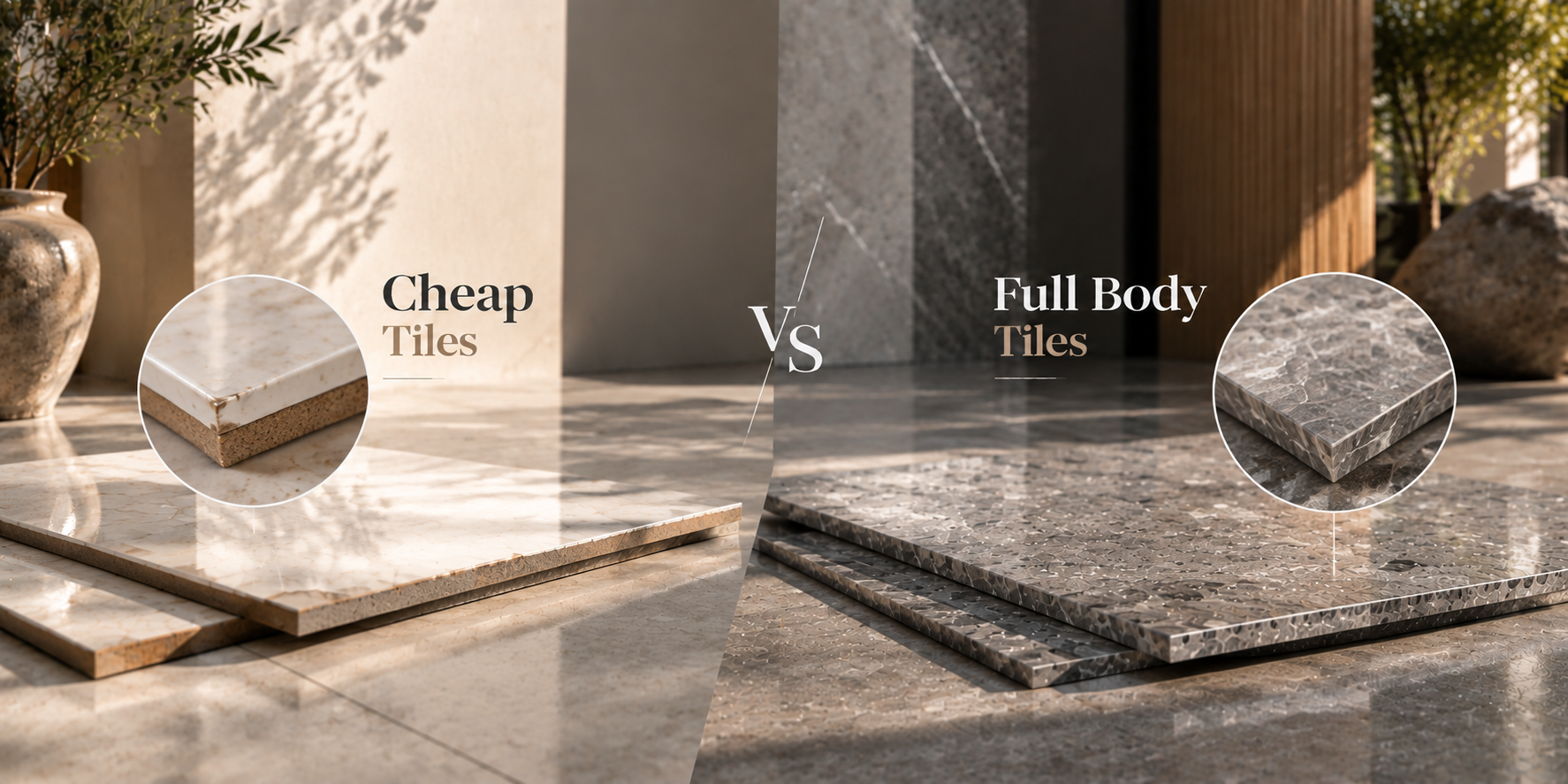
Full body tiles are manufactured using colour extending through the core of the tile, and are suitable for applications involving heavy use and high traffic.
They are widely used for commercial construction, offices, showrooms, and other locations with a high number of visitors. However, the final choice of the tile should always be informed by the specific requirements, installation conditions, and intended use of the project.
Cheap Vs. Cost Effective Flooring
Having a low purchase price does not always guarantee having a lower long-term cost.
While cheap flooring focuses on finding products with the lowest purchase price, cost-effective flooring is all about the balance between the purchase price, installation, maintenance, repairs, and other additional expenses.
Assessing the value and cost-benefit balance for large-scale developments might be a more realistic approach when it comes to considering the purchase of materials.
What Project Owners Need to Know Before Buying
Prior to purchasing tiles, project owners need to consider the following:
1. The application – the intended use or location
2. The level of traffic – light or heavy
3. The performance – whether the materials will be adequate for the specified application
4. The size – whether the materials will be placed in the specified size
5. The extent of preparation and technology needed for the installation process
6. The level of maintenance – heavy or light
7. Local availability – if the materials will be available for replacement reasons
8. The total cost – the overall cost of the entire replacement cycle
Why Lifecycle Cost Is Necessary, Especially In Large-Scale Projects
While replacing a few damaged tiles in a private house might have a negligible effect on the overall budget, this might not be the same for large scale developments.
Considering the value of the materials in large scale developments, the material price, installation, maintenance, and replacement could add up to a significant amount. With this said, lifecycle cost is important when considering the purchase of materials for large scale developments.
What Project Owners Must Remember About Purchasing Tiles
The price per square foot is just a small part of the entire cost of the tile replacement. Installation, waste, maintenance, repairs, replacements, and downtime can also affect the overall value of the flooring.
Explore the innovative floor tile solutions of Hawk Granito for residential, commercial, and large-scale construction projects.